

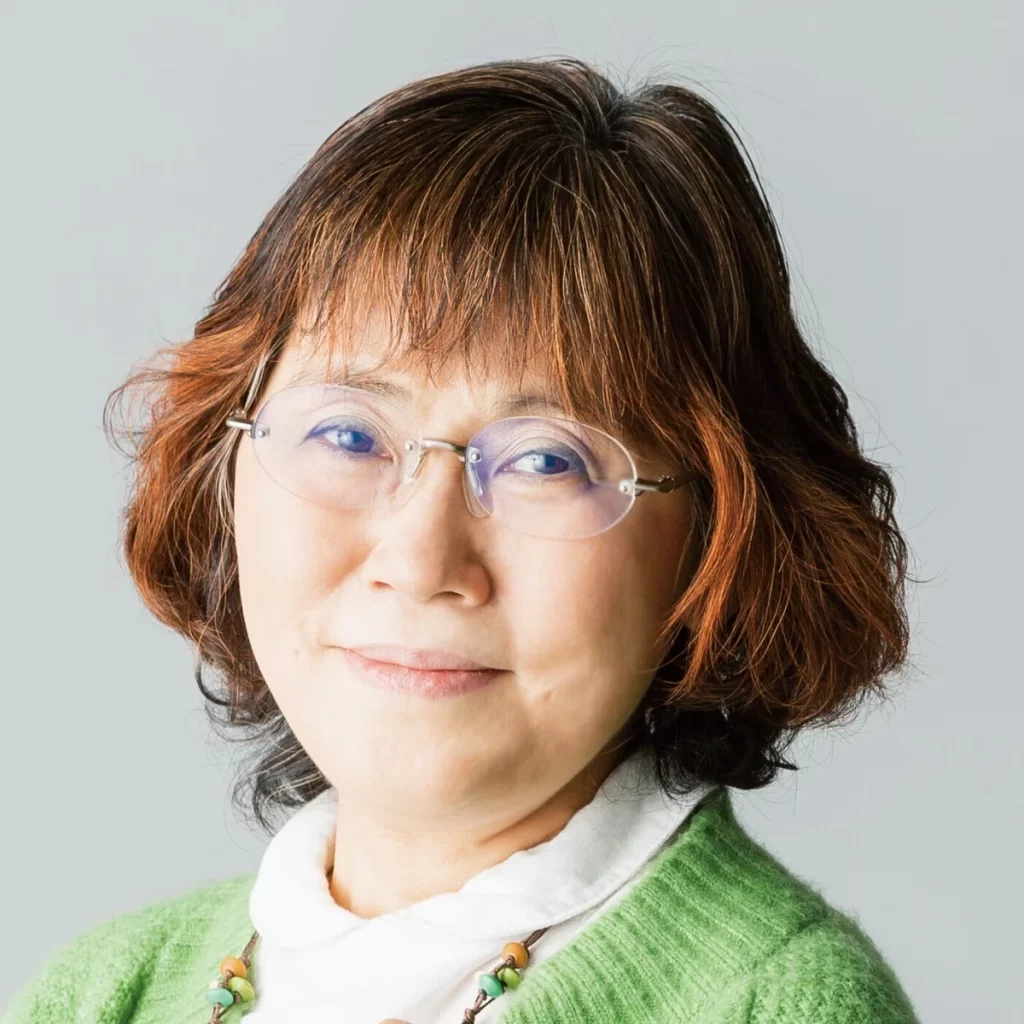
――What is your current job, occupation, and form of work?
I retired from full―time teaching at Tokyo Polytechnic University in 2023, but at the same time I have been working as an animation artist in a unit called IKIF, and in 1997 I started a company called IKIF+. I am running the company as a director and manager of the studio. I am also a part―time lecturer at Tokyo Polytechnic University and Tokyo Zokei University. I work part―time about one day a week at each. Other than that, I have the opportunity to participate in critique sessions at other universities and to serve as a juror. I participated in the screening of a grant one year ago, and I am very happy to see the films that have been completed, to meet the filmmakers directly at screenings, and to receive awards and recognition at various film festivals.
――Your work is like nurturing human resources as creators, isn’t it?
Yes, it is. I have learned a lot from my experiences at film festivals such as the Agency for Cultural Affairs’ human resource development program and the Mainichi Film Competition, which I was involved in with you, Sugawa―san. When I was first asked to serve on the jury, I felt that it was a bit too much for me to ask, but I decided to do so because I wanted to support those who work so hard to create animation, even if only in a small way.
As for the jury members, I felt that they were selected with a good gender balance. I think this is the reason why I was asked to be a member of the jury. The gender ratio is also important in the field of university education. It is important to maintain such a balance, and I myself am always conscious of it, for example, when a female faculty member retires, the next female faculty member should be selected.
―It is rare to find a female faculty member who is also a creator, isn’t it? You yourself are a valuable resource.
In my case, it was just a coincidence. I was “lucky.” I did not originally aim to become a teacher, and I did not even take any teaching courses when I was in college. There was a path at art college to obtain a teaching license and become an art teacher, but at the time I thought it was beyond me and did not even consider it. But through a strange fate, I found myself in a position where I was called a “teacher.”
――Are any of your students from the seminar already creators?
The Animation Department of Tokyo Polytechnic University was established in 2003, and the first class of students graduated in 2007. They are now in their 40s and have reached a major milestone in their lives. The career paths of our graduates are not limited to the animation industry, but they are also of a generation that has families and is working hard to raise their children. Some of our students, especially women, have had to interrupt their careers while raising children, and some are still struggling in the production field.
In animation production, which is based on group work, it is not easy to balance work and childcare. Although social awareness is improving, such as cooperation with one’s partner, there are inevitably time constraints. In the past, I was able to get by with the help of my parents who were nearby, but I feel that we need a system that allows people to continue their careers without such fortunate circumstances.
――Please tell us about your childhood. We know that your father (Tamizo Ishida) was a cameraman.
When I was born, my father was working in the photography department of NTV’s news and public relations division (or more accurately, a separate company), and in 1964, the year of the Tokyo Olympics, he established his own company, Seven Photography Co. The office was located in a building called the Hikari Building in Kojimachi, Tokyo, near the then NTV station. To be honest, it was a rather old building (laughs), but the third floor was my father’s office.
I was five years old at the time, and I remember my father running the company by himself, although people came and went. His work included not only the development, printing, and delivery of photographs, but also a wide variety of photography and news gathering, including work related to NTV. In addition, he sometimes worked with outside designers to edit and produce product catalogs. Sometimes he took the photographs myself, other times he directed the work of outside photographers and even designed the layout of the magazine. My mother sometimes went to help with accounting and other office work, and she often took me with her. I often went into the darkroom as if it were an extension of my playtime and watched with fascination as the photos came out and were fixed in place. I think these original experiences may have been what sparked my interest in film and animation.
My generation had a great admiration for Osamu Tezuka and his works, and I grew up being exposed to Tezuka’s manga as well as TV animation, so naturally I wanted to become a manga artist in the future. I loved “Jungle Taitei [Kimba the White Lion]” (1965) so much that I used to doodle a lot of Leo’s drawings (I recently found some of my old drawings of Disney Classic Animation’s “Wan Wan Monogatari [Lady and the Tramp]”(1955), which I think was also imprinted on me…. I naturally came to love drawing.
My parents were not against it and left me alone, saying it was fine if I liked it. I had several cousins on my mother’s side, all of whom went to good schools, and my parents were proud of me by telling them that I was good at drawing. I just loved to draw. It was my parents who saw how passionate I was about what I liked and approved of it.
――Did you have any comic books at home?
I think that if I asked for them, my parents usually bought them for me. I bought them often with my allowance. When I went shopping with my parents, we would often stop by a bookstore and they would buy books for me. I had opportunities to read books on children’s literature, and I often borrowed books from the libraries at elementary and junior high schools. The New Testament for children, the Old Testament, Greek mythology and folk tales. I remember borrowing and reading “Mary Poppins” and “Winnie the Pooh” from the library even before I saw the Disney movie.
――What is your favorite book?
My favorite book is Tezuka’s “Jungle Taitei [Kimba the White Lion]”. I was a little older than my older siblings when I read “Astro Boy”, and I used to read the Kappa Comics version that I found at my older cousin’s house. We usually shared manga from other people’s houses. One of the books at home that I remember is “Little Aunt Spoon”. The pictures on the binding of the book were so cute that I spotted it at a bookstore and had someone buy it for me to read. When I was in junior high school, I read Michael Ende’s “Momo” and “The Never Ending Story” and was very moved by them. When I became a university student, my partner had the complete works of Satoru Sato, including “Nobody Knows a Small Country,” so I read it and fell in love with it.
Returning to “JungleTaitei,” when I was in the first grade of elementary school, it began broadcasting as Japan’s first color TV animation. Even though my father was working for a company related to NTV, we did not yet have a color TV at home at the time, and I remember watching it in black and white. My father had just started his own company and must have had a hard time raising funds, and I remember my parents fighting a lot. My mother often spilled the beans that they didn’t have any money. My father may have been an engineer at heart rather than a businessman.
We lived in a small apartment, but we were allowed to do what we liked, so strangely enough, I never felt that we were poor. Then, when I was in junior high school, I read the book version of “Hi no Tori [Phenix]” published by Mushi Pro Shoji and was truly shocked. The content was difficult for a junior high school student to understand, but I was overwhelmed by the magnificent worldview, and because it was expressed in manga form, the important message resonated with me immediately. It was a moment when my admiration for Osamu Tezuka and manga was instantly strengthened, as I thought, “It’s amazing that he could draw such a world.”
――Did the people around you also like anime and manga?
Up until junior high school, I went to a regular public junior high school, so I don’t think I had many friends with whom I could share my love, but once I entered an arts―oriented high school, of course, everyone around me liked them.
When I took the high school entrance exam, I wanted to go to an art school because I liked drawing, so I took the art course at Nihon University Tsurugaoka High School and the Tokyo Metropolitan Art High School. I was accepted to both, but considering my family’s finances, I decided to go to the Tokyo Metropolitan Art High School. If I had gone to Nihon University Tsurugaoka, I might have gone straight to College of Art, Nihon University. Tokyo Metropolitan Art High School was a new high school, created when the art (music and art) courses of the insurance and physical education departments at Komaba High School became independent and a new school building was built on the site of Komaba High School. The homeroom teacher was an oil painting teacher who graduated from the Tokyo University of the Arts. Of course, students learned general basic subjects, but there was no “Math II,” and the department was probably thinner than that of a regular high school. Instead, there was a lot of time for art as a matter of course, which was fun, but because of the decline in academic ability, there was no option to go on to a regular university (although I remember that those who wanted to take general university entrance exams took supplementary classes), and the school was like a prep school for art and art universities. The music one was a high school specializing in music, and Ebina Yasuha was a classmate of mine. She was very active playing drums and performing live at the cultural festival, which was a very special high school. Today, the school has been renamed Tokyo Metropolitan General Arts High School with the addition of a media course, and has moved to Shinjuku―ku.
――Is the entrance examination for the high school for the arts a practical drawing test?
There was a practical test for still life drawing. My father brought in a painter who had worked with him, and I learned the basics of art under his tutelage. My parents also bought me a plaster cast of Agrippa for sketching. Looking back, I think I was able to pass the entrance exam thanks to the hard work and support they gave to their only daughter.
In high school, courses were divided into design and fine arts (sculpture, Japanese painting, and oil painting), and I chose the fine arts course. I chose the art course and painted oil paintings. I think the curriculum was probably set up as a model for the University of the Arts. I chose oil painting because I liked painting, but when it came time to apply to art universities in the latter half of high school, I decided on my own that it would be difficult to apply to both art universities and private universities with my ability in oil painting, so I decided to take the entrance examination in design. My homeroom teacher was later angry with me. As a result, I entered the Visual Design Course of Tokyo Zokei University (Department of Design).
Back in high school, I became friends with a girl who was an enthusiastic manga and anime fanatic, and we went to every single screening listed in the newly launched “Pia” magazine. At that time, independent screenings were very popular at university festivals and other events, and animated films were often shown there. At that time, there were no videos and I was starved for information, so there was nothing I could do unless I went to such places. When I went to visit my friend’s house, she had deep collection of manga, and the two of us went around to bookstores to buy new manga books together, which influenced me a lot.
We were of the generation influenced by Moto Hagio‘s “Toma no shinzo[Thomas’ Heart]” and “Po no ichizoku [Poe’s Clan],” and we would play “Poe’s Clan” by repeating lines from the manga to each other. It’s embarrassing to think about it now, but those were the days when images of comic book drawings copied and dialogue added were shown at university festivals. Influenced by this, we decided to make something together, so we took my father’s 8mm camera and went to each other’s houses to make stop―motion animation, and we formed an animation lab and began group production of cell animation imitations. I didn’t know how to make them, so I even called Tokyo Movie (now TMS Entertainment) and asked them to teach us.
――That’s amazing. Did Tokyo Movie immediately say yes?
They were very kind, probably because they thought it was unusual for high school girls to visit them. They allowed us to enter the studio’s building and taught us the basic production process. They also sold us materials such as 3―hole paper and cels. They even told us to come back if we used them up. I am sorry that I don’t remember the names of the people who helped us, but I’m thankful for their offer.
One day, someone said, “Otsuka Yasuo is up there.” We went through a narrow, creaking staircase to find him playing kendama (a Japanese toy a wooden toy made up of a ball tied to handle by a cord). He was probably just taking a break. I was so excited that I asked him for his autograph on my sketchbook and he drew a picture of Lupin III and Goemon Ishikawa without hesitation. I am speculating that he might have been kind to me because I was a female high school student (although he might have been kind to me even if a male high school student went there), but anyway, I had the impression that he was kind.
During our conversation, he told me that I should not get this job because it is really hard work, but no matter how I looked at it, it looked like fun, and “it may be hard work, but it looks like fun” was imprinted on me. When I left, I was given a set of cel pictures and backgrounds of “Hajime Ningen Gyatoruzu [First Man Giatrus]” and “Gamba no boken [The Adventures of Gamba]” Otsuka said, “We’ll throw them away anyway.” I still have them today.
――In the old days, most anime studios used to discard used celluloid pictures because they were “trash.”
Later, with the advent of the animation boom, there were incidents of people breaking into studios and stealing celluloid pictures, and finally management became stricter, didn’t it? Before that time, there was no place to store them and their value as materials was not recognized, so many of them were probably disposed of.
It was in this environment during my high school years that I made connections with a group of college students who were anime enthusiasts. At the time, there was a campaign to raise funds to rebuild Mushi Productions, which had gone bankrupt, and a plan was proposed to sell the huge amount of celluloid and background pictures left in the empty studio as sets to help the company. I also helped with sales at the “Mushipro Meiga Festival [Great Mushi Pro’s Animation Film Festival]” held at the Nippon Seinenkan Hall. Later, I saw “Taiyo no oji Horus no daiboken [The Great Adventure of Horus, Prince of the Sun]” at an independent screening of “Summer Vacation Departures,” organized by the same organizer. I was shocked. That was the first time I became aware of the names of Isao Takahata and Hayao Miyazaki.
Going back in time, when I was in elementary school, I lived in Shimotakaido, Setagaya―ku, Tokyo, and there was a Toei movie theater near the station. Now, a famous movie theater called Shimotakaido Cinema is housed in the building that used to be there. During the “Toei Manga Festival” held during the spring and summer vacations, the school handed out discount tickets, and I saw “Puss in Boots” when it was first released (1969). I had also seen “Andersen’s Tales” in the spring of the previous year (1968), and somehow missed “The Great Adventure of Horus, Prince of the Sun” in the summer, followed by “Puss in Boots” in the spring of the following year (1969) and “Soratobu yurei sen [Flying Phantom Ship]” in the summer. Of these, “Puss in Boots” was a particular favorite, and I loved it so much that I found a picture book with a sono―sheet [flexi disc] and had it bought for me. By the way, I remember being disappointed that the voice on the disc was not the voice actor from the movie.
I feel that this experience was one of the catalysts that have continued to this day. I saw “The Great Adventure of Horus, Prince of the Sun,” which I had missed, when I was in high school. I bought a book on the history of Toei Animation’s feature films, which started with “Hakujaden [Panda and the Magic Serpent]” by Toei Animation, and my awareness of gaining knowledge about animation became stronger.
I planned an exhibition of the Animation Lab at the high school festival and went to Toei Doga to borrow stills for the “History of Toei Doga’s Feature Length Animation” exhibition and also procured a film projector from somewhere and held a film screening. At the time, the Hibiya Library was lending out films, so I think we borrowed 16mm films from there. The films we screened included Mushi Productions’ “Yasashii Lion [The Kindly Lion]” and “Astro Boy” (a feature―length version with some parts in color), as well as 8mm films that we had produced ourselves. We were not being set up by the teachers, but were doing exactly what we wanted to do, just as if we were floating around because we liked it. We worked very hard, putting our studies aside. This attitude did not change even after entering university.
When I graduated from high school, “Sanrio Film” was looking for staff, and my friend got hired as an animator. (The film produced at that studio and released recently was “Chirin no Suzu [Ringing Bells],” which was broadcast on TV, and I saw my friend’s name in the credits.) At the time, I did not have the confidence to make animation my career, and I entered Tokyo Zokei University, majoring in visual design, thinking that I could make a living if I went to art school and studied design.
――So you didn’t think you would become an animator?
I thought I needed to study a little more to be a good animator, and I chose to go on to university because it was common practice to take the art university entrance exam. In the end, I am glad I chose to go on to higher education because I was able to meet people who would lead me to the next step.
――Did you watch live―action films as well as animated films at the screenings?
When I was a high school student, I was crazy about animation, and it wasn’t until I became a college student that I began to watch live―action films more frequently. I remember that I became a reader of “FILM 1/24,” an animation magazine published by Anido led by Takashi Namiki, at the end of high school or right after entering college, but I frequently attended Anido’s screenings. Having the opportunity to view Goro Sugimoto’s film collection was a valuable opportunity to learn about animation from around the world, and I enjoyed it and learned a lot.
I also went to independent screenings of Norman McLaren films, and to the movie theater called Image Forum’s experimental film screenings (I remember they were still called “underground cinema” at the time), whenever I heard that “there was animation too. The world of “anything goes” that I saw there really surprised me. If I thought something looked interesting, I went to see it, regardless of genre.
It was not uncommon at that time for student screenings to be in a state that would be unthinkable today, with the film faded and battered, or covered in scratches. There were even some terrible cases where films in Cinemascope were shown with standard lenses instead of through special anamorphic lenses, making it impossible to view them in the correct aspect ratio ……. Nevertheless, thanks to the rise of independent screenings, we were able to see many films without spending a lot of money. The price of screenings at the famous movie theaters and art―related screenings were also student―friendly, and it was a time when even young people could enjoy visual culture to the fullest.
After entering university, manga enthusiasts in the Visual Design (VD) major, which I entered, formed the “VD Manga Group,” which became the parent organization of the Manga SIG, and anime enthusiasts within the group got together and started activities to hold anime screening events as well. The VD Manga Group was spun off to form the Anime SIG, of which I was the first leader. We were holding an animation festival called “PAF” (Private Animation Festival), in which we screened any kind of animation without selection, mainly by Anido, so we decided to make 8mm films together for that festival.
――What is the name of the Zoukei Animation Club?
It was called “ZAC,” short for Zoukei Animation Club. We participated in “PAF” as a “collection of ZAC works” together with our individual works. Group production with a large number of people didn’t work out, so I started working alone with Tokumitsu Kifune, who was in the Animation Club.
――So that’s where you met (your partner) Tokumitsu―sensei?
Yes. We were the same age, but he was a freshman and entered the school a year late. When I was a sophomore, he joined the “VD Manga Group” as a freshman, and it was at that time that we began to create the Anime Lab.
――What anime have you screened at the Anime Lab?
The first film we screened was “The Devil’s Invention” by Karel Zeman. We borrowed a 16mm film from the Hibiya Library. We also borrowed many NFB films from the film library of the Canadian Embassy and screened them on campus with a simple handmade pamphlet. We were also able to borrow Raoul Servais’ films from the Belgian Embassy. Using those few channels, we were working to watch what we could.
I was in my second or third year of college when “Star Wars IV: A New Hope” was released. I saw “Star Wars” and “2001: A Space Odyssey” (revival) at Theatre Tokyo in Yurakucho, an all―night theater where I could watch them five times until morning. I also saw “Alien” at the same theater. It was back when 70mm film was still being shown.
――Did you make your first celluloid animation?
After high school, when I made celluloid animation, I was influenced by Norman McLaren, and what I made at IKIF was experimental animation.
At “PAF,” an independents―style animation screening event held at Anido (where all entries are screened without selection), there were many robot animation parodies and other things that everyone liked, but the animation at Tokyo Zokei University was experimental, with a story that I couldn’t really understand. However, Zokei University’s animations were experimental works whose stories were not well understood, and one critic said to me, “Zokei University’s works are visual violence!” I was a cynical art student who was glad to hear that.
However, I think the style of the screenings at that time, in which the various and sundry works were not divided into genres, but were all viewed equally, was very good.
It was around the same time that Hideaki Anno and others were participating in “DAICON FILM,” and they too seemed to pay attention to the fact that “Zokei University students are doing interesting things,” and we were both aware of each other’s existence. The screening was first held at Anido in Tokyo, and then the same film was sequentially screened at other animation circles around the country, such as Tokai Animation Circle (TAC) in Nagoya and Shianimu in Shizuoka, spreading and sharing the works.
There was also an event called the “Animation National General Meeting,” which was jointly organized by circles from all over Japan. Held at a rented out ryokan (Japanese―style inn), the event was a veritable whirlwind of animation fan excitement, as people stayed up all night talking with their friends from all over the country and there were rooms where works were played continuously all night long.
My partner Tokumitsu had been a science fiction fan since elementary school and was a participant in a “science fiction convention” held somewhere in Japan every year, so in addition to the Manga SIG and Anime SIG, we also formed an SF SIG, where we talked about science fiction and made coterie magazines. The SF Convention was to be held in Tokyo, and the SF Lab of Zokei University decided to take on the production of the official pamphlet through a connection with the SF Lab of Tokyo university students. I was in charge of the mascot character.
I volunteered to help with the book’s production by drafting the mascot character and creating the plates by typing the typesetting that I learned in class. Although the members of the Manga SIG, the Anime SIG, and the Science Fiction SIG were slightly different, the core members all overlapped, and we were all working in parallel.
――Was it around that time that you saw “Uchu senkan Yamato [Space Battleship Yamato]“?
I was still in high school when the TV anime was broadcast. The first issue of “Animage” was published in 1978, when I was a freshman at Zokei University. It was a big topic that Japan’s first animation magazine was published. It was just at that time.
――At the convention of the Japan Society for Animation Studies (JSAS), Tokumitsu sensei said something like, “Anime is different from animation. Did you feel that “we are making animation, not anime”?
When I was a student, I was not so conscious of it, but later, when the department was established, there was a tendency among the faculty to avoid being called “anime”.
――In the 1970s, there was a clear distinction between “animation” and “anime”?
My personal feeling is that “animation” came first, and that it was only later, when the terms “Animage” and “anime boom” emerged, that the term “anime” came to be used to refer to commercial animation. So what should we say when distinguishing between short or what we now call independent works? For a while it was called something like art animation, but it never took hold.
There are many aspects: feature, short, commercial, independent, art, etc. But we can’t say that commercial works are art and shorts are not commercial. Therefore, I think that “animation” is a good word to use as a general term for all of them.
――In the 70’s, it was amazing that students were doing screenings and designing pamphlets that really made them look like professionals.
Nowadays, even students can produce high quality work digitally, but back then it was analog, and they were trying to do whatever looked interesting within their capabilities. Art school is a place where students come to express themselves, and the atmosphere was that each student was doing creative activities on his/her own rather than being taught.
Today, universities are strongly urged to take measures to reduce the number of students who drop out of school, but I think there were more students who left in the past. I think that in those days, this was not considered as big a problem as it is today. Last year (2025), there was an exhibition called “Campus Exhibition” to commemorate the 60th anniversary of the founding of Zokei University, and I cooperated with the exhibition. At that time, I looked back at materials from my student days and researched my classmates, and was surprised to find that of the 50 or so students who entered the Visual Design major, more than a dozen had dropped out.
At that time, we had classmates who were already running their parents’ companies while still in school, and besides those who started their own businesses and left, many students were gone before we knew it. I don’t think this was limited to our major. The fact that there were many ronin students (those who failed the entrance exams once and entered university a year later) and the average age of the students was high may have contributed to this, but perhaps art students then were more independent than now and did not care so much about their academic backgrounds. Since they had originally gathered together to do “what they loved,” it was only natural that they would quit midway if their interests shifted or they found something else they wanted to do. I still feel that way.
――Do you still keep in touch with those who have left?
Not so much. We had a 60th anniversary reunion with the remaining graduates and got together for the first time in a while, and even there we talked about how they are doing. We talked about how they are doing.
――I was wondering if they are still in the animation industry?
I didn’t go into the design industry, so I don’t really know what’s going on there. However, there are quite a few of my classmates, friends from my club, seniors, and juniors who have gone into the animation industry. Some of them became famous for their Godzilla garage kits.
――What kind of work did you do after you graduated from university?
Tokumitsu and I formed IKIF at Zokei University, and after graduation I wanted to continue making works. I could not make a living as an animation artist, so I looked for work in the field of design, which I had studied. Akio Kanda, who became the advisor of the Animation Research Institute, is a well―known graphic designer, but he also created an animation coterie magazine called “Fun and Fancy Free” (Note 1) with Takuya Mori, Emiko Okada, and Makoto Wada, who was a colleague of Kanda’s at the university. When I was shown the book, I was astonished to see that all the characters were written in Kanda―sensei’s Ga li―printed script (type―like characters). I also loved the typography class he was teaching.
(Note 1. “Fan and Fancy Free” is a fanzine named after the 1947 Disney film of the same title. It serves as a record of the valuable activities undertaken by Disney animation fans in the postwar Japan. )
I respected Kanda―sensei and was fluffily active with a longing to be able to work in editorial design. However, I was addicted to animation and studied design at random, and I did not have the attitude of putting my life into design. Without finding a job, I was looking at the job section of the newspaper in February, close to graduation, when I found a second job opening at a toy company, TOMY. And the conditions were two days off a week. At that time, there were not many companies that offered two days off a week, and I applied for the position because I thought I would have time to create artwork and because I was interested in the toy company.
I took some design assignments to the interview, and I don’t even remember if I talked about my club activities, but I wrote “Walt Disney” in the questionnaire “Who are you respect most?”. I successfully got a job.
When I joined the company (1982), there were two separate companies on the same site: “TOMY Industries Corporation,” which included toy development and manufacturing, and “TOMY Corporation,” which mainly handled sales. Creative applicants were usually assigned to the development department of TOMY Industries, but it was TOMY Corporation that had a department that handled Disney characters. Here, sales and planning/development were combined under the same roof as the newly established “FV (Fashion Variety) Division,” and the prefabricated company building was the workplace. We had to go to an adjacent building to attend large meetings.
The following year, when Tokyo Disneyland opened in 1983, sponsors and stores were decided, and we needed to meet the demand for souvenir goods. Also, at the time, fashionable general merchandise stores that attracted young girls were popular in Harajuku’s Takeshita―street and Jiyugaoka, and “Tokotoko Sneakers,” which were powered by a spring, were bought by young girls as “kawaii” thanks to the hit song “Sneaker Blues” by Masahiko Kondo, so we were trying to market them as “Chiisai Frendo―tachi” (little friends). The company was trying to market Snoopy, Warner, and Disney character products with the goal of “getting away from toys” and “targeting young women,” and it was a natural progression that I, who “respect Disney,” was assigned to the company, and I can only consider myself fortunate.
TOMY is a company that specializes in boys’ toys, represented by Tomica and Plarail. It was said that Tomy was for boys and Takara was for girls. (The later merger was probably a combination of the two companies’ strengths.) It is true that many of the sales and development staff were male. It was a time when “fancy goods” such as “Sanrio” (led by Kitty―chan and My Melody), “Midori” (stationery), and “Sony Creative Products” were blossoming, and I was often told that the opinions and sensibilities of young girls were needed to create products that would sell. While conducting market research and looking for trends, I was entrusted with the coloring of toys when they were redesigned to look like general merchandise, and later on, I was even given the responsibility for original planning. Although I was new to the company, as long as I could back up my ideas with market research, such as “this fluorescent color is trendy” or “this character or goods are popular now,” my ideas and opinions were respected, and the company entrusted me with product development one after another.
It was a job that followed a consistent flow from zero to product development, and after production, to the sales floor and the results, which is similar to the workflow of animation. I feel that I was taught important things as a member of society while receiving a salary.
――Was this around the time of the Equal Employment Opportunity Law (passed in 1985)?
I wasn’t really aware of it, but it was right around that time. I think there was still a difference in terms of the amount of pay, though. A friend of mine from Tama Art University, who joined the company a year before me, continued to work after getting married, while having a baby and raising her child. She had no intention of quitting after getting married herself, and the next new female employee, who was five years younger than her, saw us and thought it was normal to work after marriage.
Perhaps it was the benefit of the Equal Employment Opportunity Law, but the common sense of quitting after marriage changed in our generation, and this may have influenced the younger generation. My junior colleague later got married and raised three children while working until retirement, and even after retirement, she stayed on as a contract worker and continues to produce hit products in the development of baby products today. Looking back, I feel that this was a turning point in the way women worked.
――Did you get married after you started working there?
After working in that division for about five years, there was a reorganization and I was transferred to a division that handled capsule toys and Shokugan (products that attach toys to candy), and then I was assigned to a company called Eugene, which was spun off from Tomy. I got married right around the time my commute to work changed to Higashi―Nihonbashi.
There was still a matchmaker system in the old days, and normally, the husband―to―be would bring a matchmaker, but my boss acted as a matchmaker for me. I was open about the fact that I was producing animation as IKIF, and I even had a good colleague of mine come to a screening of my work. When that company, which would become known as the first Eugene, decided to dissolve its offices, I had the option of returning to Tomy or resigning, and since I had just gotten married, received a congratulatory gift, and felt that I could get a job working on toys even if I went freelance. So, I decided to resign. I got unemployment insurance right away.
I stayed with Tomy and Eugene for about seven years, and in 1988, when I was just 30 years old, I resigned and became a freelancer. For the next two or three years, I bought a personal copy machine and worked at home drawing sketches for product planning.
――At that time, you were at IKIF?
Yes, I was active in IKIF, but it was not yet a business. My partner, Tokumitsu, was working at various jobs to make ends meet, and we were often asked to teach workshops at IKIF, but I couldn’t do it as a company employee, so we started working together as IKIF when the offer came. That was the beginning of my teaching work.
At the end of the 1980s, I bought an Amiga computer, and while I was working on a small project for an exhibition using a computer to produce images, I received a job for ” Patlabor: The Mobile Police, the Movie” directed by Mamoru Oshii at the end of 1988 or 1989. At that time, CG cost a huge amount of money, but we didn’t have that kind of budget, so we asked if there was a place where we could make it at a low cost. He knew that we were making a film on the Amiga, and he asked IKIF to do CG parts, saying that we might be able to do it for a reasonable price. That was my first chance to get involved in commercial animation.
At the time, “Patlabor” was being made at Studio DEEN, and I later began working with Production IG. It was just at the dawn of the digitalization of animation, and Tokumitsu was going back and forth between I.G.’s studio, our home, and his classes at the university (part―time). He would hire Zokei University students as part―timers and have them join the staff directly after graduation, and the work would increase. Then we decided it would be better to form a company.
By that time, I continued to work at Zokei University part―time while raising my oldest son. My parents, who lived nearby, helped me by picking up my son from daycare and taking care of him when I was busy with work. I was also looking for part―time student workers and babysitters who could also babysit. My father advised me to form a company instead of doing things individually, and in 1997 we became a corporate organization as IKIF+, Seven Photography Imaging Division, Inc. My father passed away in 2001, and in 2015 we changed our name to IKIF+. The mid―level staff that grew up in the company became producers and directors, and now they are the core of the operation.
――Where did you do your production work at that time?
At first, I set up a computer in a room of my rented apartment in Keio―Tamagawa, Chofu, and invited part―time workers to work there. My parents bought a house in Keio―Tamagawa and we lived there on the assumption that we would inherit it, but my father passed away the same year I worked for Tokyo Polytechnic University, and later I had to live with my mother to take care of her, so I turned the house my parents lived in into a studio.
――So you were teaching at the university, creating art, and raising children at the same time.
Really, I was so busy at the time that I didn’t know what was going on. Both members of the duo (unit) were full―time university faculty members, so I think it was important that we were able to understand each other’s circumstances. We were also fortunate that our parents had bought a house nearby, which helped us to take care of our children. When a teacher I knew at the daycare retired and went freelance, I asked her to be my personal sitter. It cost a good deal of money, but at the time I could not choose any means to get by.
I did not expect that the student who came to me on a part―time basis to also babysit would become someone I would run and support IKIF+ with, but as it turned out, she did, and I was fortunate that although I was busy, I was able to make a valuable connection with someone through teaching at the university.
――What would you say is the ratio of male to female of those students?
I have one male and one female on the board of directors.
――About a 50/50 ratio of male to female students?
Tokumitsu knows more about the early days of Zokei University than I do, but at the time when the department and major in computer graphics was established, there were many male students who wanted to do computer graphics, and the number of female students was small.
――I think that even now, there are more men in CG.
That may be true to a certain extent, but in terms of students studying animation, there are more women at both Zokei University and Polytechnic University nowadays.
――I have also heard that it is difficult to get male students.
Is it that companies want to hire men, but there are no good ones? There is the idea that they want to take men because they can work longer, but I feel that more and more women are continuing to work even after marriage, childbirth, and childcare. There are individual ideas, but it is becoming more common for couples to work together to raise their children.
――I would like to return to Tomy story for a moment, but how was the environment around you? You mentioned that it was a good time for women’s opinions to be heard.
All the managers were men.
――Did you feel that there were any traditional customs in the male―dominated society?
I did not feel any discrimination based on gender, but rather I felt that I was treated well by the people around me. It was also a workplace where “women’s sensibilities” were in demand, and I was entrusted with work in recognition of this. As the person in charge, I often traveled alone to meetings and checks with vendors. For example, in the production of a ceramic piggy bank, I went alone to a workshop in Seto, Nagoya, for checking and meetings, and I also experienced several business trips to the provinces.
While I was entrusted with responsible work, I was also given good support from my supervisors. Perhaps it was because we were a small team, rather than a development department of TOMY Industries, which had a detailed division of roles. In the development department, as in the animation field, the division of labor was divided into a mechanical team for mechanicals, a packaging team for packaging, and a design team for design work. The planning process was based on a broad range of ideas that were shared among all members.
We all came up with a wide range of ideas for planning, conducted market research, and consulted with the sales team to see if we could sell the product. This style of planning is followed immediately after planning to the point where prototypes are made and presented, targets and quantities are planned, and the product is put on the production line to go out into the world. Looking back, I was involved in the same manufacturing work as in the animation production process, but I did not feel that there was any distinction between being young and being female.
I explained products at toy shows, and I was transferred to toy stores to learn in―store sales demonstrations, cash registers, and gift wrapping. I was frustrated when stores sold items that did not belong to my company, so I would put Tomy products on the front of the shelves. Nintendo released the “Game & Watch” and it was a huge hit, and I watched in real time as the toy world was slowly being taken over by video games. Nintendo, originally a company that made Hanafuda (Japanese playing cards) and playing cards, became a hit with toys such as the Magic Hand (Ultra Hand), which eventually led to the Family Computer and Super Nintendo Entertainment System. It was a very interesting experience to see such dramatic changes in the industry. After I left the company, I was really surprised when Tomy merged with Takara and became “Takara Tomy.”
――At that time, were there quite a few women among your colleagues?
There was a small percentage of women in the entire company. Out of 30 people in the entire division, there were about 4 or 5 women, and about 2 women in sales. Women in sales also worked hard.
――You had a jovial personality, and I get the sense that you must have been in the center of the crowd.
Looking back, many of my female colleagues close to my age were better talkers than I was. Of course, I work quietly at work, but at the parties, we all got along well and had a good time, and anyway, I often laughed a lot both at work and at the parties because the sales people were so funny.
――Did you have the common feeling that “women have to serve drinks”?
There was a certain atmosphere, but I didn’t pay much attention to it. I wasn’t forced to drink. I myself have asthma, and drinking alcohol makes me suffer, so if I said, “I can’t drink,” they didn’t force me to drink. Everyone drank on their own. I never experienced any oppression in a male―dominated society. Perhaps it was the corporate culture of the company. We were in the business of selling fun, so I think there was an atmosphere that everyone had to have fun. Tomy’s standard products were model trains, so there were salesmen who liked trains and wanted to work in the hobby division, but they were in the fashion variety and did their jobs while blabbing, “I don’t understand. But he was lucky that he made it to the Hobby Division.
Toys are not absolutely indispensable in the world, but the way they entertain people is similar to animation, and I am glad that I was able to join such a company. I was also allowed to plan, design, and create my own original products. I don’t know how they allowed me to do such a reckless thing. We certainly didn’t sell many of them, and from the beginning, we decided to sell them in small lots.
I have repeatedly told you that there was no particular discrimination or stress in the workplace, but looking back now, it may be that my boss, who was five years older than me, took care of me and protected me so that I would not feel that way. Although I was completely unaware of it at the time, I realize now that it was the awareness of my supervisors and coworkers close to my age that allowed me to enjoy my time without feeling stressed. Perhaps I was just insensitive when I was younger, but it was the support of those around me that made it possible for me to devote myself to my work.
――What kind of product is it?
<About the original products>
We do market research on popular stores to find out what kind of materials and gimmicks are available and what kind of designs are selling well, and come up with lots of ideas. Kawaii is now attracting attention overseas as well, and our products are basically kawaii, meaning that young women like them. We aimed to develop products that were three―dimensional, practical, gimmicky, and fun, which is the essence of the TOMY toy business.
<Tomy’s piggy bank series>
The “Pac―Man” piggy bank (with coin―eating gimmick) was originally a big hit for TOMY, and formed the company’s best―selling product lineup. However, since it had previously been geared toward adults and men, the company was asked to come up with an idea for women. Some of the original products were redesigned with Disney characters, etc. The original products were made of ceramics, including plastic materials. For the original product, we came up with many ideas for ceramic and wood products as well as plastic materials.
Product example 1) Ceramic memo board “Poem message”
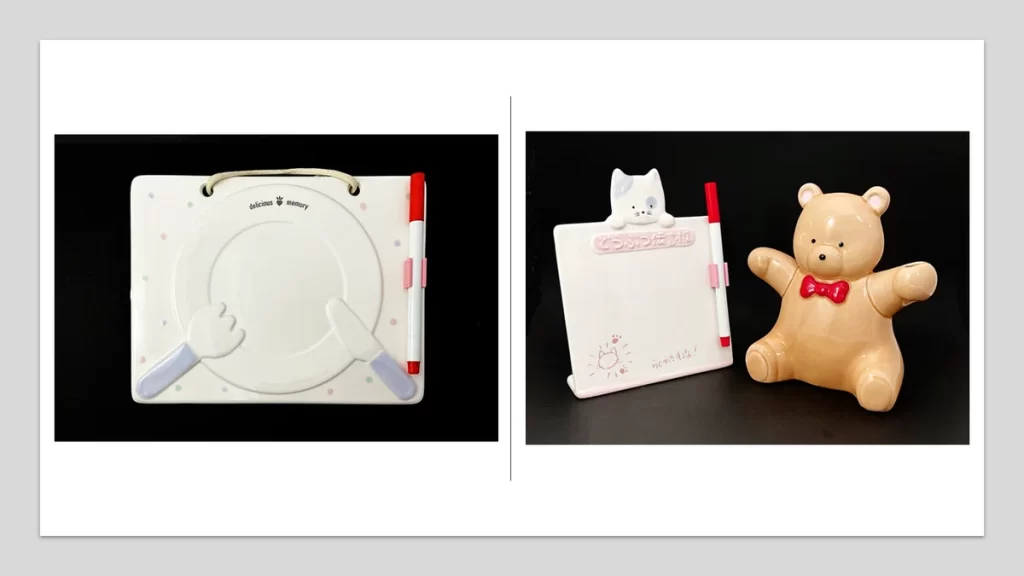
We planned a ceramic piggy bank with a whiteboard function, focusing on the fact that pictures and letters can be written on the ceramic surface with a whiteboard marker. We even produced a sample, but in the end, it was made into a product as a message board without piggy bank function.
Product example 2) Unglazed piggy bank “HANIWA CLUB”
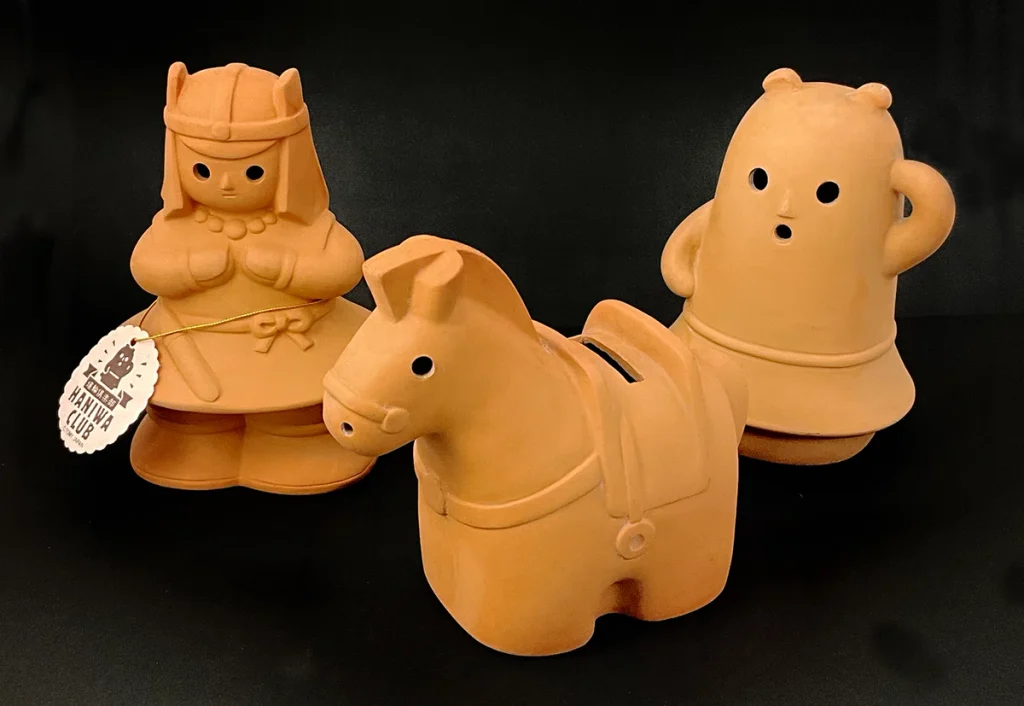
At the time, a children’s TV program called “Oi, Hani Maru” was broadcasted! Haniwa Club was a popular children’s TV program on air at the time, and we commercialized three types of unglazed piggy banks with Haniwa designs: human, soldier, and horse―shaped. I myself love Haniwa, so I made the design and the three―sided drawing with a focus on the “cuteness” of the shape design. Nowadays, Haniwa goods are no longer rare, but I am proud to say that I was a pioneer in this field (laugh).
Product example 3) Wood Craft Series: “Wood Creation: Enichi Mainichi Oinari Street”
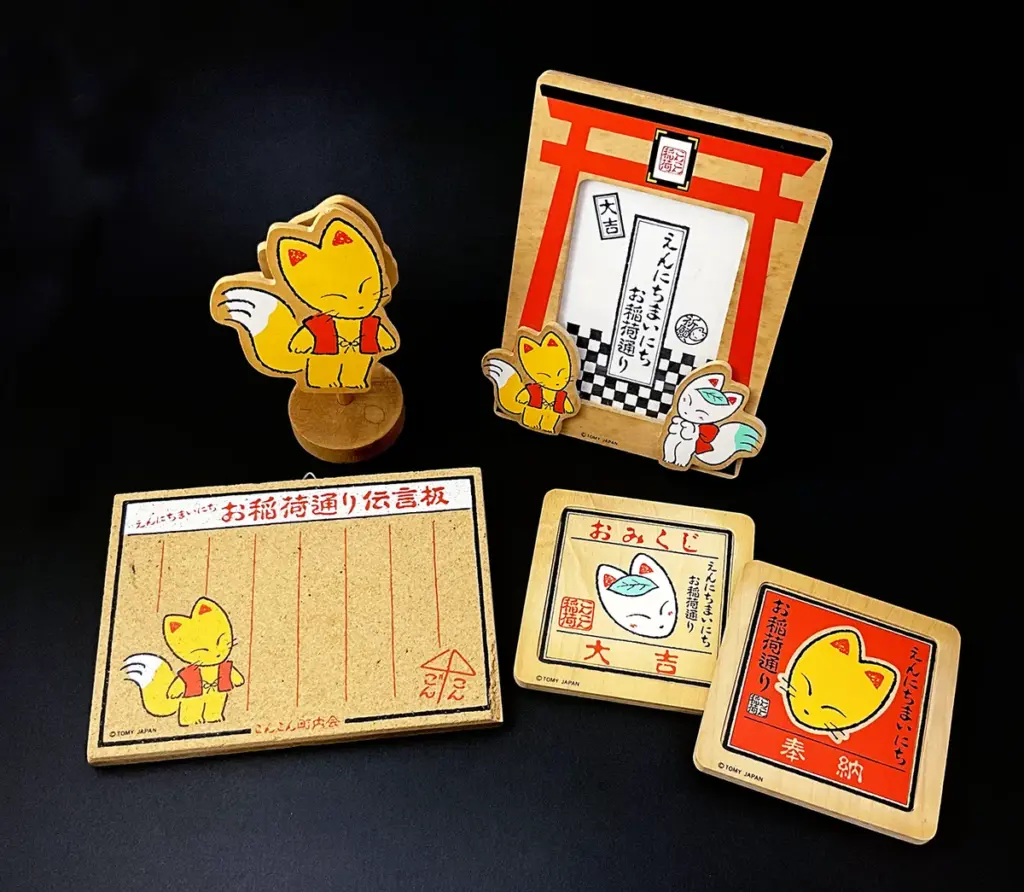
We set up and designed a character based on the motif of a fox statue at the Inari Shrine, and developed it as a series of wooden products. The lineup included a piggy bank, a photo frame, a mini corkboard, a soft vinyl figurine stamp, a coaster, a clip stand, a memo stand, a name tag, a ballpoint pen, a mini sticker, a mini mask, a keychain, a hook, and a badge, all of which could be displayed to create an Inari Shrine worldview. I remember going to Toyokawa Inari Shrine in Akasaka to interview the designers and get permission to commercialize it, and was surprised at how much of a power spot it was.
Product Example 4) “Animal Cleaner”
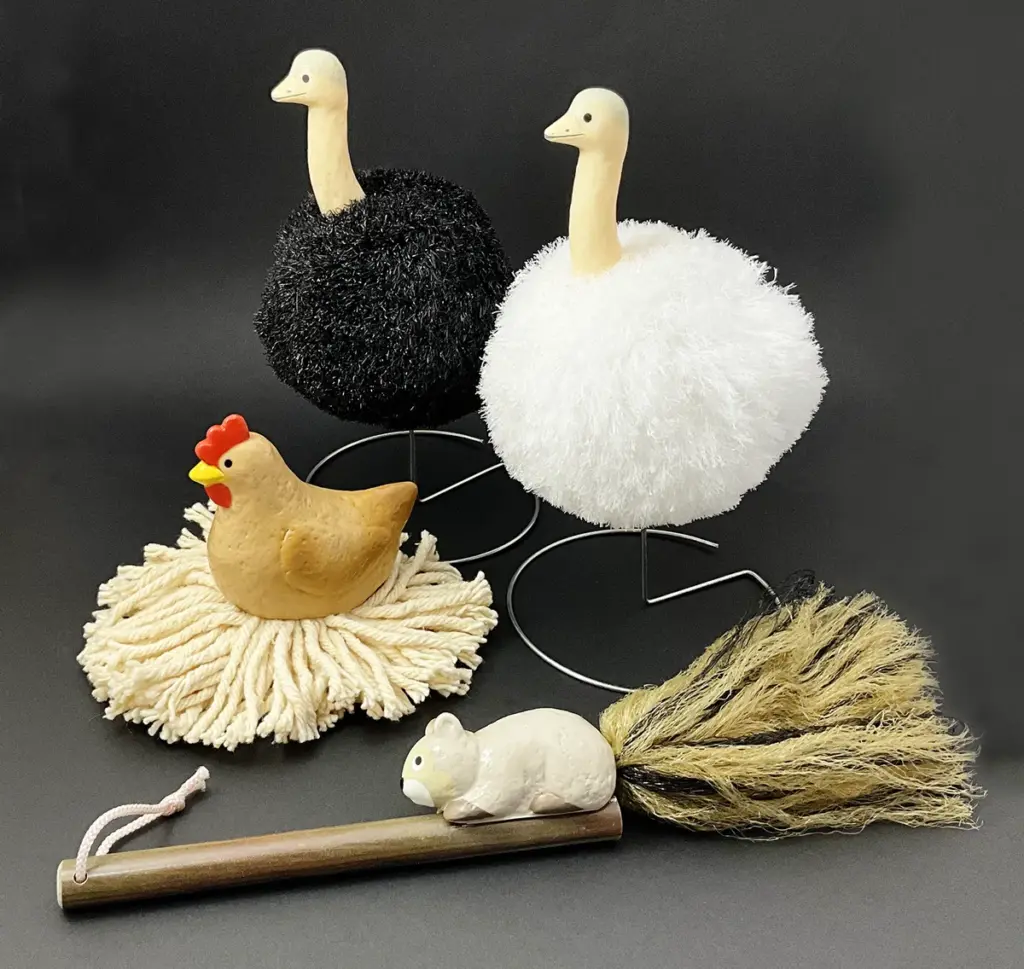
The idea for this product came from the idea that “a tawashi looks just like a hedgehog, which is cute,” and we wondered if we could commercialize a series of everyday cleaning products with cute “living creature” designs. There were three types: “kurin dacho [Ostrich Cleaner],” a ball―shaped cleaner made of a then―new material with a soft vinyl neck; “Niwatori moppu [Chicken Mop],” a mop made to look like a chicken’s nest with the chicken part as the handle; and “Hataki risu [Squirrel Duster],” a squirrel’s tail that becomes a flap.
――How was your life at that time?
I was working on the commercialization of toys at the company while at the same time creating works at IKIF, so after work I would often go to where Tokumitsu lived, work until midnight, come home, sleep a little, and then go to the office. The company had two days off a week, but instead of that, we started and ended the workday and reduced the lunch break time, making the workday about 30 minutes longer, so the start time was 8:50 AM. The route across Tokyo from my home to Tateishi in Katsushika Ward, crossing the Sumida River and the Arakawa River via Oshiage Station, which is now the home of the Sky Tree, took about one and a half hours. I left home at 7:00 a.m. and could catch the first train if I waited at the intermediate station, so I did my best to go there five days a week while ensuring that I had time to sleep. If I stayed up all night the night before, I was useless in the morning, and when sleepiness struck, I had to go to the bathroom to get through it, but I was young and was able to get through it.
――What was the ratio of women in independent animation productions?
When I was a university student, there was a screening that I think was put on by Anido, called “Nobuhiro Aihara and Taku Furukawa: Animation Tag Team Match.” I saw it and thought it was interesting, so I decided to invite Mr. Aihara to the Zokei University Festival, and Tokumitsu and I went to Image Forum to interview Mr. Aihara and to gather materials. We interviewed Mr. Aihara, created a booklet, and held a screening with a talk.
After the screening, we talked with the people who came to see the event, and Mr. Aihara encouraged us to take this opportunity to create and present our work together, and we formed a group called “ANIMATION80.” We named the group ANIMATION80 because it was founded in 1980, and we held our first screening that year. After graduation, I continued to exhibit my films until the 11th screening.
There was an animation club at Musashi Art University called “Mysterious Phantom Lanterns,” which included Masako Iimen, Yuko Asano, Kaori Koyama, and several other female artists. I had also participated in Mr. Aihara’s screening, so we decided to work together on ANIMATION80. Also, I think there were many women artists in the “Group EBISEN” led by Masahiro Katayama.
Ms. Asano recently screened a compilation of her past works at the Experimental Film Festival, and I also worked with her at a screening hosted by the Kawasaki City Museum. She continues to make films from the standpoint of an artist. Masako Iimen is an artist who performs live sand art, including video, and she is doing a great job. It was a great pity that two female members of “Group EBISEN” passed away at a young age. Ms. Iimen organized and held a screening called “Peach Animation,” gathering animation artists who were only women. I had assisted her in designing the package and making the prints for a video label publication, but since IKIF is half male, I did not participate in the screenings.
I think it would be good to interview Ms. Iimen and Ms. Asano, who were involved in the project, but there was definitely a trend for women artists to get together and appeal to the public. Although marriage and child―rearing may inevitably create a blank period, many people start working when they are able to work after a break, and I think it is no different for both men and women that those who work do so.
――Have your own experiences of marriage and child rearing impacted your work in any way?
I think that marriage, child―rearing, and my work as a university faculty member have both taken my attention in that direction. However, when I was occasionally asked to make openings and endings for commercial animations, it was a challenge, but it was also very rewarding and gave me emotional support. I have always loved visual devices such as the phenakistoscope and zoetrope, and I have used them as teaching materials for my students, so I have continued to improve my work using the flicker of light to create frames for the surprise board.
Originally, I had been making abstract animations based on the theme of memory, but upon retirement, I was cleaning out my personal belongings and began to think about whether I could use the vast amount of personal photographs left behind by my father, who was a photographer, in my work. Since I had spent several years scanning and digitizing the paper photos, I decided to take time―lapse prints and throw them away, and started with the intention of setting up a photography set at the venue of my retirement commemorative exhibition at Polytechnic University in February 2024 to finish shooting. I was not able to finish filming at the retirement exhibition held at Zokei University in June and July, so I continued filming at the company studio from August to the beginning of September, and finished editing the video in November of the same year.
I asked Kensaku Tanikawa, who has composed music for IKIF’s works for many years, to record the video in January 2026, and it was completed in February. To be honest, I am worried about whether it will be interesting for people to see, but I am thinking of creating an opportunity to present it. Tokumitsu is having heart surgery due to the Covid and cannot take it easy, and he also has to run the company, so the pace will be slow, but I hope to continue to make films little by little as I sort out my personal affairs.
――Now “ego―documents” are very popular, which use individual archives such as diaries and photos to depict the spirit of that era. In that sense, your work is very interesting.
I went to see part of the program for the 2025 Image Forum Festival, and there are several works by young people who have unraveled and created works about the war and the past. I feel that 80 years after the war, there is a trend to look back on the past and to preserve memories and records of the past. I felt that young people are focusing on this trend and creating works of art. Our idea is to look back and write down the past because we are getting old, but today’s young artists are learning things they did not know and using it as an opportunity to create artwork. Maybe it was just the program I happened to see, but I felt it at this year’s festival.
This documentary film is about researching and interviewing my own grandmother and grandfather about their time. Although the films were not animated, I was impressed by the works that used various techniques to bring the past into relief, such as the inclusion of abstract pictures and time―lapse photography as a technique. In a work that visualizes a story told by a person who experienced the Tokyo Air Raid, she keeps talking about how she ran away with her child on her back, but the child died. On the other hand, what you see on the screen is present―day Tokyo. That is the kind of film I made.
When we were young, we grew up with the high economic growth, so we just let the heat take over and ran with whatever we wanted, but I guess the young people of today are not in that kind of mood. Maybe they go to the past because they have no hope for the future.
――Do you have any message for young people who are thinking of pursuing the same kind of career or want to work independently?
When I look at students these days, I sometimes feel that they are somewhat cold, or that their enthusiasm for making things is a little lacking. Even in the creation of artworks, I don’t see the same level of insatiable desire to get to the bottom of a situation where just one step more persistence would make it much better. I think they tend to give up early and call it quits, saying, “That’s enough.”
While I feel that I cannot say “work harder,” I can say from my own experience of doing what I love and realizing that this is what I am doing now, that if you work hard at what you love for now, you can go on and there will be a place for you. Therefore, I tell them that facing and creating each piece of work, each assignment, and each graduation project without compromise will become your passport. Regarding employment, the younger generation tends to value work―life balance, so even if they do go on to work in the animation industry, they are looking for companies that offer good pay and conditions with a good future.
There are many students who decide to become animators while still in school, and those who are good at drawing earn money by working part―time as animators, which is good but has the detrimental effect of preventing them from focusing on their assignments. Even if they enter school yearning to become animators, when they realize that they are not good enough, they start to look for a different type of job, but they seem to accept this reality and calmly think about “what to do for work” when job hunting.
The time is not peaceful, but rather disturbing, and there seems to be a strong sense of anxiety about the future that is different from those days of high economic growth when we were still in the same period. How to deal with AI is also a big issue at universities. Until now, digital tools have been an extension of our own hands, but how to incorporate tools that can create images and video without our hands into education, and how to advise students, is not something that can be simply banned. It is difficult. In an age where common sense is changing and being updated, those who provide guidance are forced to discuss and practice, and I feel that we are living in a truly difficult age.
When CG came out, some people said that hand―drawing would disappear and everything would be CG only, but hand―drawing is still hand―drawing, and expressions combining 3DCG and 2DCG are flourishing. I think it is important to find what only you can express, what you want to do, and your own theme. I think it goes back to the words of someone I know, “Start with a piece of paper and a pencil.” Also, students these days tend to want to be taught the correct answer quickly, perhaps because they don’t want to fail, but I don’t want to give them the answer, and I try to teach them to “try first,” “it’s okay to fail,” and “find the answer on your own.”
I know there will be some backlash. Because there is no right answer in creativity. On the technical side, there are various routes to production, so rather than being taught one method, it is important to do your own research and develop your research skills. Nowadays, there is an abundance of information on the Internet at if you look for it. If you cannot keep learning and discovering what you want to do, you will not be able to keep up with the rapidly changing world.
People who can search for and discover things on their own and create jobs are needed, not those who are passive recipients of work. I think the best thing to do is to keep your antennae open for various things, be curious, and have a spirit of fun. In the field of animation, hiring full―time employees has become the norm, and the eight―hour workday has become the basic rule, with instruction to avoid working long hours. I think that the better the working environment is, the more it will limit the amount of time that can be spent on production, and this may take away the opportunity for growth.
In the Showa era (1925―1989) working style, especially in the animation industry, it was common practice to stay up all night and do whatever was necessary, but of course that is not allowed nowadays. However, there are many skills that can be absorbed while staying up all night, and the more you do it properly, the more conflicted you are about not having those opportunities. I want to come in the morning, work an 8―hour shift in the evening, leave the office, and then enjoy my time. While it has become a principle to separate one’s private life from one’s work, we are now in an era where unit production costs are rising and results commensurate with compensation are severely demanded. The question is how each individual uses his or her time for growth and skill improvement. How do we take time to learn while working? How do we think about work―life balance? I think we live in difficult times.
――In this age of gender equality, is there anything in particular you would like to say to women?
Marriage, child rearing, and child rearing are major obstacles for women. There are those who choose not to get married or have children. Full―time employees can take maternity and childcare leave and are guaranteed a certain amount of money, but I think it would be good if the world became an environment where companies and society support and make it easier to work, even if it is not full―time employment or outsourced work. People have become more aware of this, but whether or not their husbands and families will cooperate with them is also a big factor.
If you have a problem, don’t worry about it on your own; there are always places to go for advice, so please seek them out and get help. In our company, one of our staff members who recently had her first child asked me, “How does she manage her work and child―rearing? I advised, “Why don’t you ask her directly?” I can’t talk to her easily because she is remote. We have meetings via videoconference, but it is difficult to chat or talk about personal matters, which is a weak point of remote work.
Of course, there are good aspects of remote work. If my child gets sick and I have to pick him up from daycare or school, it is easier to move around than if I had to come to work. I feel that the ability to work remotely at Covid was a good way for the child―rearing generation to be able to continue working. Above all else, human communication is the most important thing in my work. Knowing, gaining knowledge, practicing, and growing. University is a place to learn this process, but I can’t shake the impression that students these days know too little.
Perhaps it is due to the lack of reading since childhood or the trend toward short exchanges on social networking sites, but I feel that writing skills are also becoming weaker. Perhaps the accumulation of basic education and thinking has become a bit diluted. Students don’t realize that these basic skills are very important even if they enter the creative world. I want them to learn more about peripheral fields other than animation, so I tell them they should read more books or go to art exhibitions, but I find it troubling that they don’t go out and take action.
――It is strange, isn’t it? We live in a world where we can search and look up anything, but surprisingly, everyone has only shallow knowledge.
That’s true.
――I feel that we have become much freer than in the past.
If you look up information, you can find it easily, and sometimes you can’t, although you have to be careful with AI because it can contain lies. In the past, people were so hungry for information that they went to get it themselves, but now there is so much of it that it seems to be the opposite. Since students only watch animation and know too little about live―action films, I have started a campaign in my seminar to promote film viewing. We have them watch movies, analyze the story structure, create color scripts, and summarize live―action films into one―minute animated summaries. We make a list of recommended movies and guide them to watch a movie by saying, “This is good for what decade.”
What I am interested in is the possibility that they are watching the movie on their smartphones since they are not watching it in a movie theater but on subscriber platforms, and I recommend that they watch it on a big screen as much as possible….As for animation, they watch films that interest them, but don’t know anything else. At Polytechnic University, most of the students have never seen “AKIRA” or do not know about it, so I show “AKIRA” in Ms. Megumi Toyama’s class. Manga is not on the Internet, and Katsuhiro Otomo is a “stranger” to today’s young people. We live in a world where things that are not on the Internet don’t exist….
――They pay no attention to what they don’t see around.
That’s right. It’s frightening. You think it was just recently, but then you realize it was 20 or 10 years ago…it’s like the students have never seen it at all. It makes me realize that I am getting old.
――We are interviewing female filmmakers, but also analyzing the representation of women. I assume that you have been contracted by commercial animation companies to do CG and other aspects of their work, but have you ever been concerned about the representation of women in the work you have been contracted to do in the commercial animation industry?
I don’t think there was anything that bothered me in the work I was involved in. Tokumitsu told me that there were work requests with sexual content, but we turned them down. I would take this into consideration in order to have the staff work comfortably. I was once told by a female staff member that she was not comfortable with violent fighting films.
――What about anime in general?
This may be a little off the subject of “expressions of women that bother me,” but… I once went to see “Ponyo on the Cliff” and was shocked by the realism of the representation of the grandmother. I was just at the time when I was taking care of my mother, and the gestures and appearance of my own mother and the grandmother on the screen were so cruelly similar that I felt like I was on the verge of becoming uncomfortable because they were so truly realistic. I guessed that Director Miyazaki’s own perspective and observation of his elderly mother must have been reflected in his expression, and I found myself feeling both overwhelmed and reluctant to see the film.
Some time ago, there was a topic that live―action remakes of Disney Classics animated films are not interesting because of excessive PC, political correctness. I don’t think that today’s creators have no respect for the old works, but it is sad to see old works being overwritten (in a bad way) in new ones. I hope that students studying animation will learn about the historical background and watch Disney Classics properly. It would be nice if there is an opportunity to see it in theaters instead of distribution.
――Please tell us about the opening scene of “Doraemon the Movie” you worked on.
I have created about five openings for “Doraemon the Movie” under the name IKIF. The first one I worked on, “Nobita no Wannyan Jikkouden” released in 2004, was the last movie version with Nobuyo Oyama and other old voice actors. I was allowed to work freely, so I started by writing storyboards. We used the same technique as in “Minipato” and “Tachiguishi Retsuden,” using CG to move the pepsert dolls, but I think we gave it an IKIF touch by having Cinecalli and Zoetrope make an appearance. I had hoped to meet director Tsutomu Shibayama at some point, but I was a little disappointed that I never had a chance to meet him.
In 2006, a new series started with new voice actors, and in the first film, “Doraemon the Movie: Nobita’s Dinosaur” (2006), I was not in charge of the opening, but the staff of IKIF+ practically became the CG directors and produced the CG of the main film. The following year, starting in 2007, IKIF directed the opening for four films (“Doraemon the Movie: Nobita’s New Magical World Adventure ― 7 Magicians”, “Doraemon the Movie: Nobita and the Green Giant Legend”, “Doraemon the Movie: The New Record of Nobita’s Spaceblazer” and “Doraemon the Movie: Nobita’s Mermaid Legend”) and was in charge of CG for the feature―length CG, with IKIF + production (CG director) for the main feature CG.
We changed the taste of expression for the opening each time, and I have good memories of how much fun it was to work on the opening, including the challenge of using digital paper cut―outs in a shadow picture style, picture book style, clay animation techniques, and pastel 3DCG expression.
――Thank you very much for your time and talk.